Energy and Combustion Services (Pty) Ltd · Support and sales: +27 31 765 0443ISO 9001 · SANAS-accredited M&V Inspection Body · Proudly South African

Energy, fuel and carbon management specialists
Total Fuel Control — Verified. Intelligent. Accountable.
SmartFEMS™ delivers a fully automated, intelligence-based fuel management and control system, designed to eliminate manipulation, verify every transaction, and provide complete operational visibility
Lower fuel and energy costs
Find and remove waste across fleets, plants and processes.
Reduced emissions
A credible, data-backed path to your decarbonisation goals.
Greater operational reliability
Clear operational intelligence to protect uptime and safety.
Compliance you can defend
Validated diesel rebate logbooks, ready for SARS.
Why ECS
A partner, not a vendor
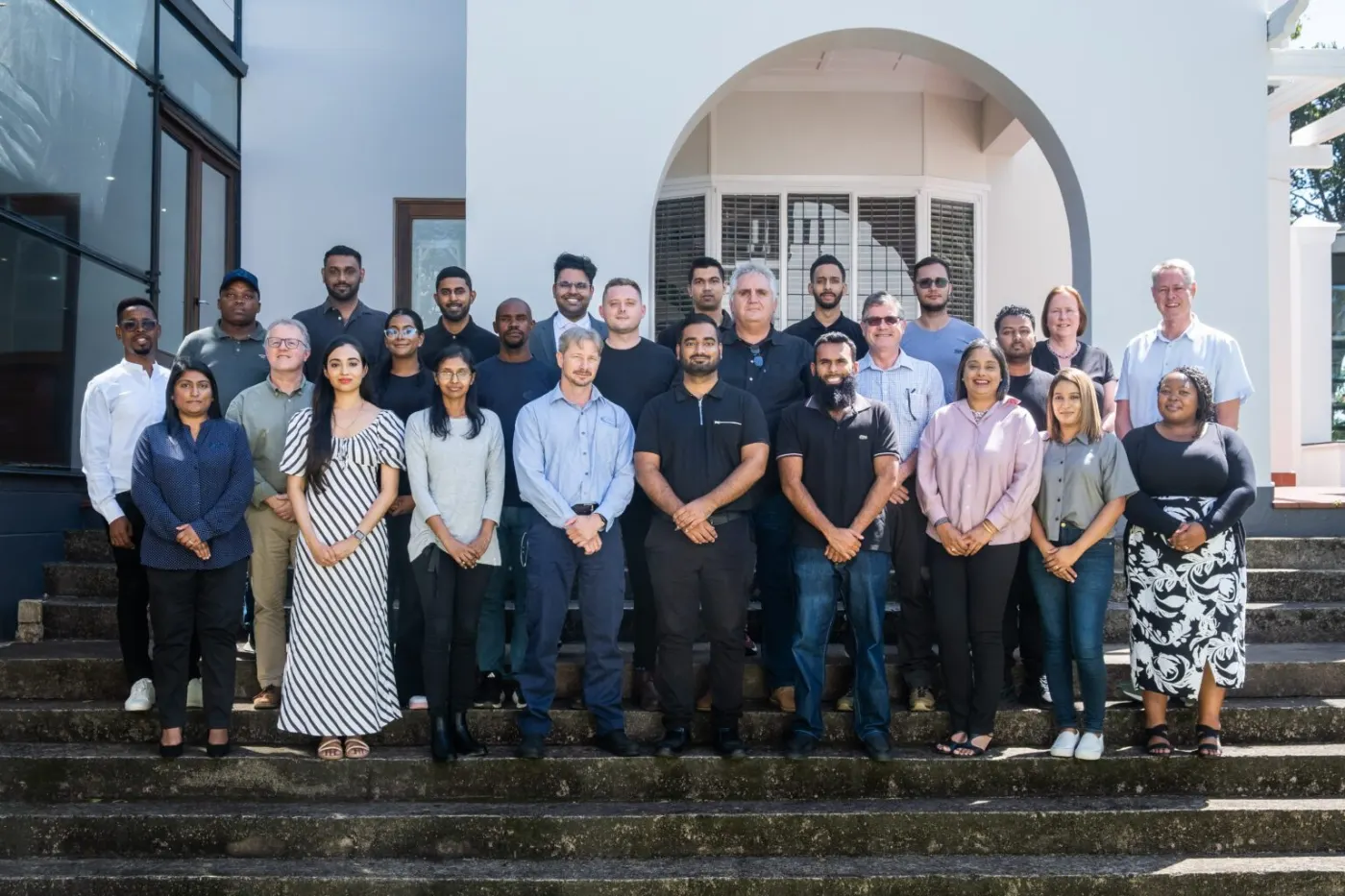
For three decades, ECS has worked beside mining, industrial and commercial teams to solve the hard problems that affect business continuity, environmental stewardship and nation-building — from our head office in Kloof, near Durban, KwaZulu-Natal.
TenacityRelentlessly pursuing solutions that overcome challenges and deliver measurable value.
ExcellenceConsistently exceeding expectations through quality, precision and impact.
ConnectednessBuilding collaborative relationships that create meaningful, long-term outcomes.
The ECS digital platform
Seven solutions. One platform.
Select a solution on the wheel to see what it does — or press play to tour the platform.
ECS DIGITAL PLATFORM
Energy, Carbon & Productivity
Powered by one data layer, advanced analytics and ECS people on site
Our solutions
Solutions shaped around your outcomes
Technology is the enabler. The result is clearer decisions, lower costs and progress you can prove.
 Energy & productivity · Flagship
PEMS™ — Productivity and Energy Management Services
Link energy use directly to production. Digital twins, counterfactual baselines and predictive analytics show where every kilowatt-hour and litre delivers value — with ISO 50001-aligned energy management and M&V-verified savings you can stand behind.
Discover PEMS Fuel & fleet
SmartFEMS™
A fuel management system that gives accurate visibility into fuel use across your entire fleet, for measurable efficiency gains and improved control.
Learn more Fuel & fleet
SmartDRS™
Clean, validated fuel data and a monthly logbook ready to package for your SARS diesel refund claim. For South African operations only.
Learn more Fuel & fleet
SmartDSM™
Unlock load-and-haul performance by turning fleet data into clear analytics and actionable insights.
Learn more Fuel & fleet
SmartRoad™
Road condition monitoring that shows where haul-road quality is costing fuel and time.
Learn more Carbon & transition
SmartOSR™
Opportunity Scoping Review — an energy and carbon audit that identifies and quantifies your savings opportunities.
Learn more Carbon & transition
SmartEPS™
Model your longer-term energy and carbon transition pathway with confidence.
Learn more
Measurement & Verification services
As a SANAS-accredited M&V Inspection Body, we independently verify the savings your projects achieve.
Industries
Built for energy-intensive operations
Every ECS solution can be applied across the industries we serve — wherever energy and fuel are among the largest controllable costs.
Mining
Load-and-haul fleets, fuel accountability, diesel rebates and haul-road performance.
Manufacturing
Energy performance across plants, processes and production lines.
Food & beverage
Energy-intensive utilities, processing and distribution fleets.
Rail & logistics
Fuel control and accountability across locomotives and vehicle fleets.
Data centres
Energy, water and carbon tracking for critical facilities.
Read: data centre energy managementEnergy & fuels
Fuel verification, control and emissions reporting.
How we work
From first scope to verified savings
A clear, four-step approach that turns operational data into results you can stand behind.
- 1
Scope
We identify and quantify where energy, fuel and emissions can be reduced on your site.
- 2
Connect
Our solutions link to your production, fuel and fleet systems to create one reliable data view.
- 3
Optimise
Your teams act on clear insights — working alongside our specialists.
- 4
Verify
SANAS-accredited M&V confirms the savings, so results stand up to scrutiny.
See ECS in action
How ECS turns energy data into measurable value
A short introduction to who we are, how we work with customers, and how our solutions help operations use energy with greater precision, efficiency and control.
More about ECSCase studies
Proven results in the field
Real results from ECS projects at mine sites, explained simply. Select a case study to see the challenge, what we did and the result.
Load & haul
Keeping mining equipment working, not waiting
The challenge. Large mining machines often run their engines while they aren’t moving any material — during shift changes, breaks, refuelling trips and long pre-start checks. That burns fuel and costs money without producing anything.
What we did. We helped the mine cut this unproductive time with places for operators to take breaks and swap over quickly, smarter dispatching, better-placed refuelling and faster pre-start checks.
The result. Unproductive engine time fell from about 5.5 hours to around 1 hour per machine per day — saving 440 000 GJ of energy and 26 000 tonnes of CO₂e a year at the example site.
Request the full case study →Payload
Filling every truck properly
The challenge. When haul trucks leave the loading area under-filled, the material left behind still has to be collected later — meaning extra trips, extra fuel and extra cost.
What we did. Working within the truck manufacturer’s limits, we helped introduce payload monitoring and loading performance reports, so operators consistently fill trucks to their rated capacity.
The result. Trucks went from carrying about 90% of their rated load to 100–105%. At one site, the average load rose from 298 to 334 tonnes per trip.
Request the full case study →Payload
Lighter trucks, smarter buckets
The challenge. Heavy truck bodies and poorly matched loader buckets limit how much each truck can carry and mean more digging passes to fill it.
What we did. We supported lighter, stronger truck bodies, better-designed loader buckets and improved loader controls that give operators instant feedback.
The result. On the same truck fleet, the average load rose from 195 to 230 tonnes per trip — with fewer, faster loading passes.
Request the full case study →Haul roads
Smoother roads, less fuel
The challenge. Rough, poorly maintained haul roads make trucks work harder: they burn more fuel, wear out tyres faster, travel slower and are less safe.
What we did. We combined road condition monitoring (including SmartRoad™), performance analytics, and better road maintenance and surfacing.
The result. On a well-maintained road, a loaded truck needed about a fifth less power to travel at 28 km/h — 300 kW instead of 380 kW.
Request the full case study →Loading
Less waiting at the loader
The challenge. Every minute a loader waits for the next truck to get into position is a minute of lost production.
What we did. We introduced loading from both sides of the loader, spotter-assist technology that helps drivers position quickly, and smarter truck dispatching.
The result. Loader waiting time was eliminated and the time needed to position each truck was cut to a minimum.
Request the full case study →Load & haul
Keeping loaders and trucks in rhythm
The challenge. When trucks arrive unevenly, loaders either stand idle or trucks queue up — both waste time and fuel.
What we did. We used better dispatching, performance analytics and management of the full truck cycle to keep arrivals steady and predictable.
The result. Each loader moved 7 000 instead of 4 900 tonnes an hour (+40%) using 12% fewer trucks, and the operating cost per tonne fell from R14.00 to R10.20.
Request the full case study →Our impact
Results our customers can measure
Cumulative results across ECS projects.
220Successful projects
708million kWhEnergy saved
75million litresFuel saved
R801millionFuel cost savings
R590millionTax benefit
Trusted partners
Some of our customers
Leading mining, industrial and commercial organisations rely on ECS to manage energy, fuel and carbon with confidence.





Testimonials
What our customers say
“The value they have added to our operations does not only pertain to energy savings but also to production increases.”
Principal Engineer: Electrical and Energy, Kumba Iron Ore Limited
“Peter is an outstanding professional, highly efficient, attentive, and reliable. His level of professionalism, much like that of the ECS team, is truly exemplary. It is a pleasure to work with them.”
Principal Engineer: Energy Efficient Market Manager, TotalEnergies
“In our journey towards energy efficiency, the work that ECS does is crucial in answering the questions that we would have struggled to answer, and that gives us an edge.”
Principal BI, Sishen
Our footprint
Built in South Africa. Trusted on six continents.
Hover over the map or a region to see where ECS supports customer operations.
Loading map…
17countries
6continents
Africa8
South AfricaBotswanaNamibiaMozambiqueZambiaTanzaniaGabonGhana
South America3
BrazilChilePeru
Oceania2
AustraliaPapua New Guinea
Europe2
FranceUnited Kingdom
Asia1
Singapore
North America1
Canada
Head office: Kloof, KwaZulu-Natal
Credentials
Certificates & accreditations
Recognised quality systems and specialist qualifications behind every project we deliver.


News & insights
All articles Thinking that powers progress
 Diesel rebates
SARS Diesel Refund Modernisation: Why Proof Is Now the Bottleneck
N. Singh · 22 October 2026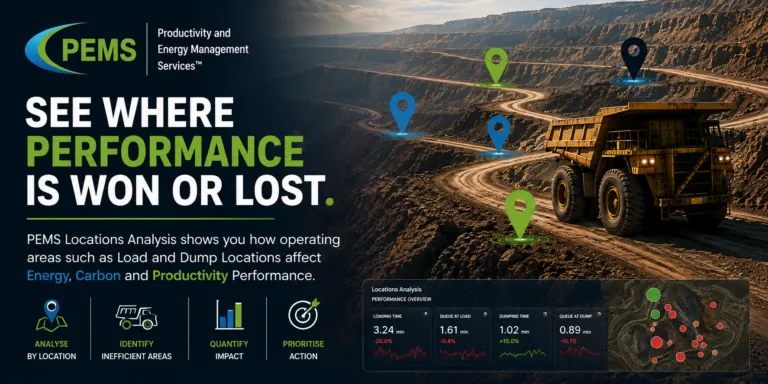 Energy management
PEMS Locations Analysis: See Where Performance Is Won or Lost
N. Singh · 28 August 2026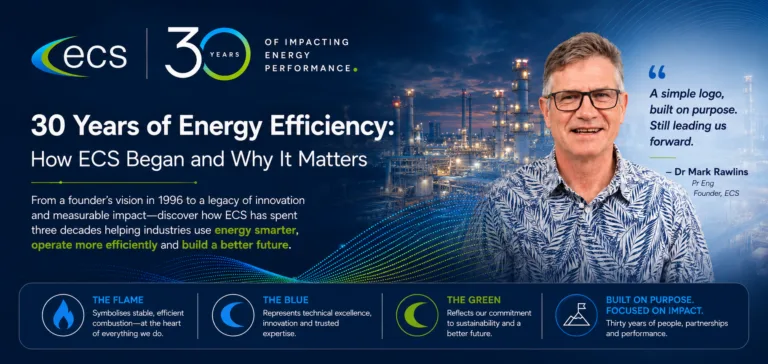 Company news
30 Years of Energy Efficiency: How ECS Began and Why It Matters
N. Singh · 19 August 2026What does ECS do?
ECS (Energy and Combustion Services) is a South African energy management company with its head office in Kloof, near Durban, KwaZulu-Natal. We help mining, industrial and commercial operations improve energy efficiency, reduce energy and fuel costs, manage carbon emissions and prove the results — using our Smart solutions, specialist engineering expertise and SANAS-accredited measurement and verification (M&V).
How can ECS help with the SARS diesel refund?
SmartDRS™ acquires, cleans and validates your fuel and production data, matches fuel to the work done, audits and re-allocates exceptions, and produces a validated logbook that can be packaged for submission to SARS. SmartDRS™ is available for South African operations only.
What is SmartFEMS?
SmartFEMS™ is ECS’s fuel management system. It gives you full control of diesel from delivery and storage through to dispensing and use: every transaction is authorised, recorded and verified against the right operator, vehicle and location. Losses and unallocated fuel are quickly exposed, so you can manage fuel use with confidence and build a reliable record for diesel rebate claims.
Can ECS help us claim the Section 12L energy efficiency tax incentive?
Yes. Section 12L claims must be supported by energy savings that are measured and verified against a baseline. As a SANAS-accredited M&V Inspection Body, ECS independently verifies the energy savings your projects achieve and provides the M&V reporting your claim needs.
Does ECS support ISO 50001 energy management?
Yes. PEMS™ supports ISO 50001 energy management systems with energy baselines, significant energy use analysis, energy performance indicators and governed reporting — backed by ECS energy analysts.
What is M&V, and why does accreditation matter?
Measurement and verification (M&V) quantifies the savings a project achieves against an agreed baseline. ECS is a SANAS-accredited M&V Inspection Body, so savings are verified to a recognised, independent standard.
Which industries does ECS work with?
We work with energy-intensive operations including mining, manufacturing, food and beverage, rail and logistics, data centres, and energy and fuels.
Where should we start?
Most customers start with an Opportunity Scoping Review (SmartOSR), which identifies and quantifies the energy, fuel and carbon opportunities across your operation.
Get in touch
Let’s solve your hard problems together
Start with an Opportunity Scoping Review. We’ll identify and quantify the opportunities across your operation.
Send us an enquiry
Block D, Bellevue Campus, 5 Bellevue Road, Kloof, 3610, KwaZulu-Natal, South Africa